An unfamiliar number lights up your phone. Do you answer it?
While the number of scam calls varies every day, unwanted calls can be frustrating! Yeesh.
Before you do anything, take a breath. Not every unknown call is dangerous, but caller ID alone does not tell you who is really on the other end.
We all know that phone scams are more than annoying. Our state-by-state report on 2024 scam and fraud trends shows just how costly they can get. California consumers reported nearly $1.7 billion in fraud losses. Texas came close to $900 million, while Florida topped $866 million. These totals cover reported fraud generally, not just phone scams.
Yup. Crazy number territory.
Now, that does not mean every unfamiliar caller is a scammer. It means you should verify before you trust. No single search can prove who made the call, especially when phone numbers can be reassigned or caller ID can be spoofed. Your best bet is to compare what you find in more than one place.
So, how do you find out who is calling without putting your privacy at risk? Below are eight ways to start a free cell phone number lookup or screen an unfamiliar call. Some services charge for detailed reports.
Related Article: Whose Number is Calling Me?
1. Search Facebook and Other Social Platforms Carefully
Did you know Facebook and other social platforms can sometimes help you identify an unknown phone number? You may find it on a public business page or post. But (and pay attention, this really matters) Facebook disabled direct profile searches by phone number. Searching publicly shared content is different.
Start by searching the full number. Try it with and without parentheses, spaces, and hyphens. Focus on publicly shared information. A public business page, marketplace listing, event post, or older public post may give you another clue.
Pro Tip: Treat anything you find as a clue, not proof. Compare the name, location, business, or other details with at least one other source. You definitely do not want to contact or accuse the wrong person based on one social-media result.
Another problem? Phone numbers get recycled. Overwhelming, but true.
The FCC created a database to help reduce calls meant for a number’s former owner. So, the Facebook post you find could refer to the person who had the number before. Learn more about reassigned phone numbers.
2. Screen the Call Before Answering or Calling Back
You do not need to panic every time an unfamiliar number appears.
Start by slowing down. Screen the call and verify who is contacting you before you share information, send money, click a link, or call back.
When you can, let the call go to voicemail. A legitimate caller will usually identify themselves, explain why they are calling, and give you enough information to look into it.
Also, do not trust the number on your screen by itself. Scammers can spoof caller ID and make a call look local—or even make it look like it came from an organization you recognize. The FCC explains how caller ID spoofing works and what to watch for.
Here are a few reasons to screen a call when you are not sure whose number is calling:
- It could be a scammer. Many scammers are skilled at pretending to be representatives from banks, government agencies, delivery services, etc. Simply answering the call can confirm that your number is active, which may lead to more scam attempts directed at your phone number.
- It may be a telemarketer or robocall system. Answering or interacting with an unwanted robocall may lead to more unwanted calls.
- It could be someone you prefer not to contact you. In some rare but possible cases, unknown calls may come from former connections, estranged contacts, or just any awkward situation involving people who are attempting to re-establish communication, likely without your consent.
- It could be someone attempting to gather personal information. Some callers try to keep you on the phone long enough to collect small pieces of information, record your voice, or trick you into confirming details they can misuse.
- It could be part of a “one-ring” phone scam. In this type of scam, the caller hangs up after one ring to prompt you to call back. Returning the call may connect you to a premium-rate number that charges high fees. Read how to recognize and avoid one-ring phone scams.
- It may be a spoofed number. Scammers can disguise their real phone number to make it appear local or familiar, making the call seem trustworthy when it is not.
Be especially careful when someone creates a sense of urgency combined with asking for money, gift cards, cryptocurrency, passwords, security codes, or personal information. Scammers can even use AI-generated voices to sound like someone you know. Verify the story through a phone number or communication method you already trust. The FTC explains how voice-cloning scams work.
3. Use a Reverse Phone Lookup as One Verification Signal
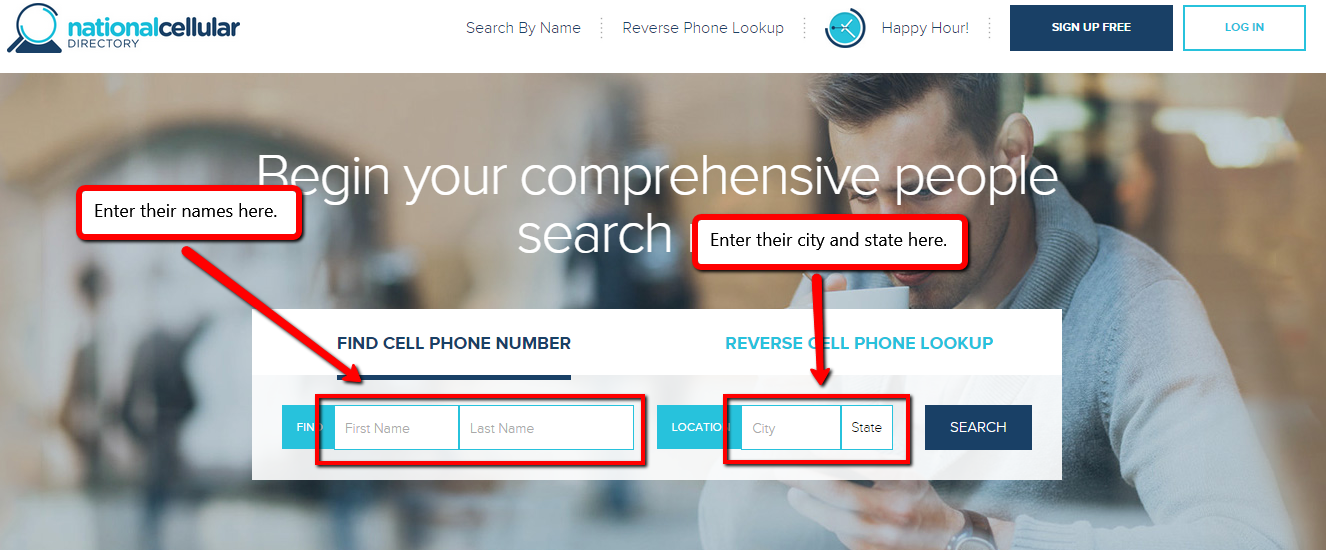
Looking for a free reverse phone lookup? This type of search checks available records for possible information connected to a phone number. Depending on what is available, a report may include information like a name, general location, address history, email address, or related contact details. But not all of these tools are free.
Use The Toolbox Below to Perform a Reverse Phone Lookup Now!
We suggest using our tool for your reverse phone lookup needs. A great benefit of creating a membership with National Cellular Directory is our free daily lookup window where registered members can currently perform two premium name or phone searches at no cost during the limited daily window.
For example, let’s say a number keeps calling and the lookup shows a possible business name. Visit that business’s official website and compare the published phone number. Call the official number to verify the message, even if it matches the caller ID.
4. Search the Exact Phone Number in Google
Google is still worth a try—just do not get your hopes too high. It works best when a phone number has appeared on a public business page, government notice, news story, online ad, complaint forum, or public post. Private cell phone numbers may not show up at all.
For example, public telephone numbers, such as an IRS phone number or your state’s Medicaid phone number, are usually easy to find through Google on official government websites. A private cell phone number may be harder to find because it isn’t necessarily listed online.
One more thing before you dial: Even an AI-generated search answer can point you toward the wrong number. In September 2026, security researchers reported examples of fake customer-support numbers appearing in AI answers. So, before calling a business or government agency, open its official website and check the contact page. Finding a telephone number is one step. Making sure it belongs to the organization you want is another.
Start by putting the complete phone number in Google’s search bar, preferably using quotation marks.
For example: “000-000-0000”.
You can also search it again with and without parentheses, spaces, hyphens, or the country code.
Not finding much? Add a word that describes the call, such as scam, robocall, business, customer service, delivery, bank, or the name of the organization the caller mentioned.
Always check who published the result and when. An official company or government page holds more significance than an anonymous comment. And remember, several websites may repeat the same wrong information.
Just an FYI: Finding no search results does not automatically mean the number is safe.
5. Learn What an Area Code Can—and Cannot—Tell You
A geographic area code can tell you where a number was originally assigned. That is helpful—but it cannot tell you the exact location of where the caller lives now, where the call actually came from, who made it, or whether it is legitimate.
People move and keep their cell phone numbers. Numbers also get transferred between carriers and reassigned to new owners. On top of that, scammers may spoof a familiar local area code because they know you are more likely to answer.
Do not assume an international-looking number is automatically a scam. And do not assume a local or toll-free number is safe. Legitimate organizations, telemarketers, and scammers can all use toll-free numbers.
Remember those one-ring calls? They may look like they came from a U.S. number. If the phone rings once and stops, do not call back just because the area code looks familiar. The FCC has more information on one-ring scams that use familiar-looking phone numbers.
6. Check Caller-Reporting Communities—But Treat Reports as Leads
Websites like 800notes, a database built by its users, can help you spot a pattern when several people report similar calls from the same number. With these online communities, people share information on a call they receive. If other people have received a call from the number contacting you, they can report it on the website for you to view later.
Just remember: user reports are not verified proof. A number may have been spoofed, reassigned, or reported incorrectly. Use the comments as a clue, then verify the claim through an official source.
You can also search consumer-reported scam patterns through BBB Scam Tracker. BBB reviews reports before they are published, but the information is still submitted by consumers, so do not treat one report as a final answer.
In July 2026, BBB updated Scam Tracker with ZIP-code filtering and an interactive scam map, giving you another way to spot patterns in reported scams.
And please, do not post private information, threats, or accusations online. Share what transpired without exposing personal details or identifying someone based only on a phone-number match.
7. Use Carrier Call-Labeling and Blocking Tools
Check call-labeling and blocking tools already available through your carrier, phone settings, or a reputable call-screening service.
Depending on the tool, it may label suspected spam, silence unfamiliar callers, send certain calls to voicemail, or block numbers connected to flagged calling patterns. Features and fees can change, so check your carrier’s current information.
These labels can help, but they are not perfect. A legitimate call may be mislabeled, and a scam call may still slip through. It is still important to safely verify.
The FCC keeps an updated list of call-blocking tools and options for stopping unwanted calls.
8. Whitepages
To start, there is a difference between “a white pages directory” and the Whitepages website. A white pages directory refers to the general term for a traditional phone directory that lists people’s names, addresses, and phone numbers in alphabetical order. Whitepages, however, is a specific website and company that provides online reverse phone lookup and people searches.
Ultimately, Whitepages is a business that offers limited free information and charges for more detailed reports.
For example, when I ran a report, the Whitepages website asked me to pay for the phone number owner information found on the number I provided.
However, it did offer some free information, such as identifying the number as low-risk and showing the general location of the owner. Knowing the number was considered low-risk was helpful to me. But a “low risk” label or matching name is not a guarantee. A scammer can spoof a real person’s or business’s number, and an old record may be connected to the number’s previous owner.
To access more detailed information, though, a paid option was required.
What Is the Safest Way to Identify an Unknown Number?
So, what’s the best choice? Honestly, there is not one method that can guarantee who placed the call. Your safest option is to use a few of these methods together and slow down before you respond.
- Let the caller leave a voicemail when you can.
- Search the exact phone number and check who published each result.
- Use a reverse phone lookup as one clue—not final proof.
- Verify banks, government agencies, medical offices, and businesses through a phone number you find on an official website.
- Block unwanted calls. If the contact becomes threatening or persistent, save voicemails, messages, and screenshots.
Think it was a scam? Report the fraud to the FTC and file a complaint about an unwanted call with the FCC.
You can also register your number or report Do Not Call violations online.
Do not let an unfamiliar call rush you. Pause. Look into it. Verify what you find. Then decide whether to answer, block, or report the number.